A foundation is a promise you keep after the campaign ends
Most charitable attention arrives in waves and leaves with the news cycle. Our first year at the gaushala was spent building the opposite — commitments measured in decades, to five hundred animals who will still be here when the wave has gone.
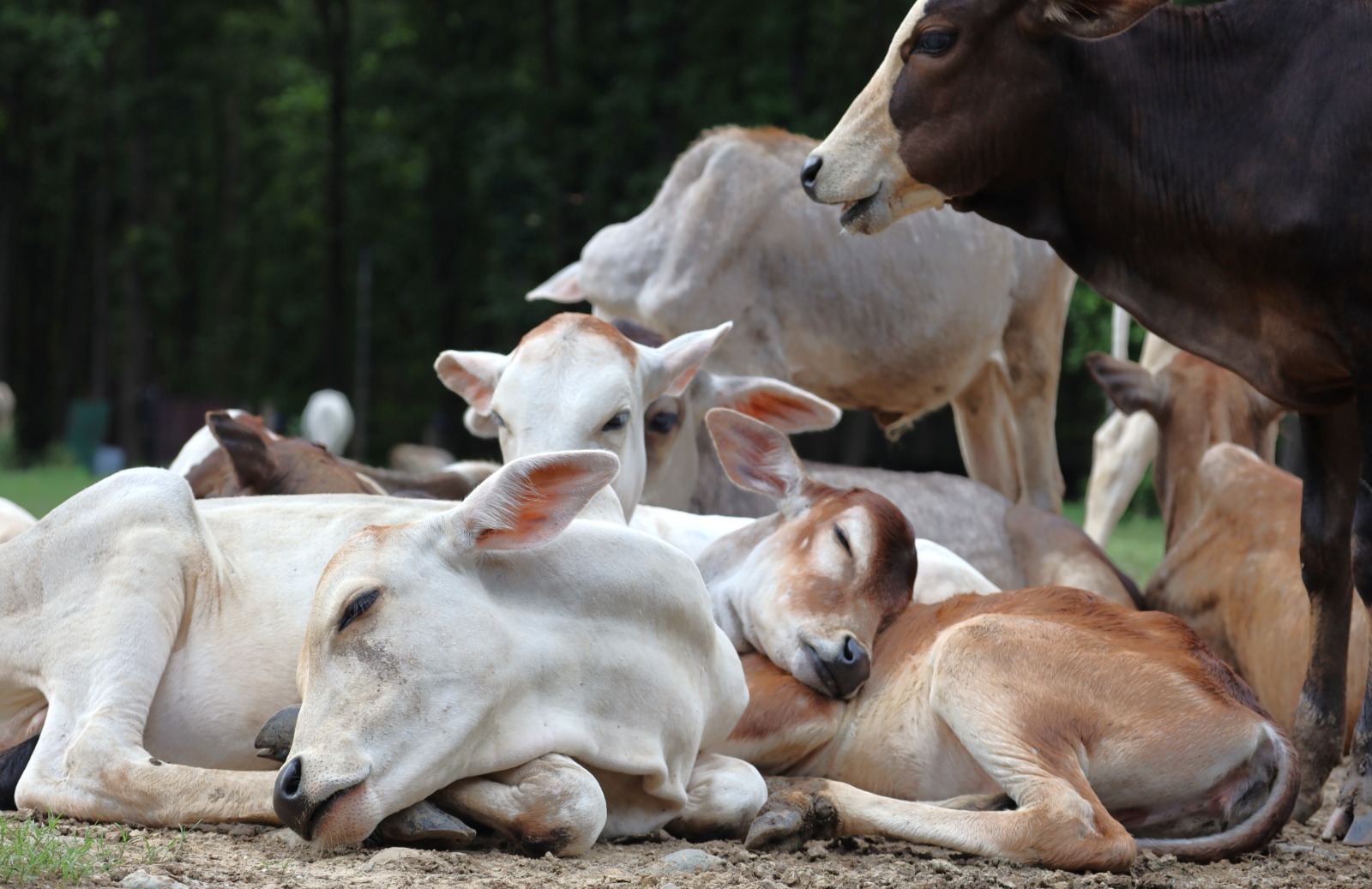
The first winter was the one that taught us. A donor campaign had done well — better than we expected — and for six weeks the courtyard was full of people who wanted to help. Journalists came. A television crew filmed the calves. Then February arrived, the story moved on, and the animals still needed eighty kilos of fodder a day.
Nothing about that is a complaint. Attention is a gift and we were grateful for it. But it clarified something we had been circling for months: a shelter is not a campaign. It is a standing obligation. Every cow that walks through our gate is a fifteen-to-twenty-year commitment to feed, water, treat and eventually bury an animal that will never produce anything in return. You cannot fundraise that in bursts. You have to build for it.
This is an account of what we changed, what it costs, and what we still get wrong.
The arithmetic nobody puts on a poster
Rescue photographs well. A cow is pulled off a highway median, there is a truck, there is relief, there is a good image. What does not photograph is month fourteen, when that same animal has a hoof infection and needs a vet from Kathmandu who charges for the journey.
So we published our real per-animal cost, which we had previously kept vague because it is uncomfortably high. Here is a single cow for a single year:
Multiply by five hundred and the shelter needs roughly NPR 2.3 crore a year before a single rupee goes to anything else. That number is the whole argument for changing how we raise money.
An emergency appeal buys you a month. A hundred people giving a thousand rupees buys you a decade.
Three things we changed
None of these were clever. They were mostly a matter of admitting what the shelter actually is and then organising around it honestly.
A morning at the shelter, in order
People ask what the money does. The most honest answer is not a pie chart — it is a schedule. This is a Tuesday, unremarkable, no emergencies.
What we got wrong
We over-built the intake before we built the capacity to hold it. In the first eight months we accepted every animal offered to us, which is the morally simple choice and the operationally worst one. By September we were feeding more cows than we had shade for, and two elderly animals died in a heat week that better planning would have survived.
We now run a waiting list. It is a bad feeling to keep one and it is the correct thing to do. An animal we cannot house properly is not rescued; it is relocated.
We also under-invested in staff for far too long. Volunteers are wonderful and they are not a shift rota. Four full-time gwalas now hold the schedule, and the difference in animal condition since we hired them is more visible than anything a donation drive has produced.
NPR 3,900 a month covers one animal completely — fodder, water, veterinary care, and a share of the gwala's wage. You receive her name, her photograph, and a note each season on how she is doing.
Sponsor an animalWhat the next year asks for
A covered shed for the western paddock, which is the difference between shade for two hundred animals and shade for three hundred and forty. A borehole, so we stop trucking water in the dry months. And two hundred more monthly sponsors, which would take the shelter from month-to-month to genuinely stable for the first time since it opened.
None of that is dramatic. It is roofing, plumbing and standing orders. But it is the thing that will still be true in ten years, long after this piece has stopped being read — and that, in the end, is the only test of whether a foundation was worth founding.